To understand our position on unions, it is helpful to understand not only what a union is, but what a union is not. Unions are not clubs or social organizations.
A union is a business.
- Unions represent their members in dealings with employers. In return, unions charge fees for their services. These fees are often deducted directly from employee paychecks.
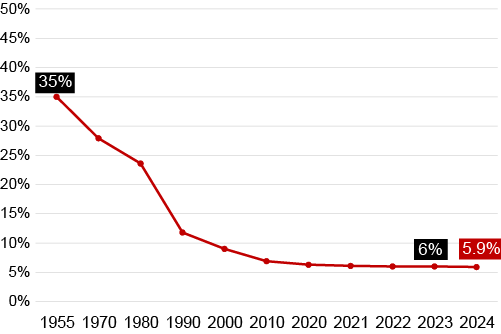
- Today, less than 6% of workers in the private sector belong to a union. Like any business, unions need a revenue stream to stay in business. This revenue comes from dues paying members. Unions need new members to survive.
- The main source of money for unions comes from dues, fees and assessments paid by their members.
- The more members that unions have, the more membership fees and dues they can collect.
Temco is an attractive target for unions because of our large workforce. They have a vested interest in you signing up to be a member.
Union Membership
(Private Sector)
What Unions Can and Cannot Do
Unions CAN
- Collect dues, fees, fines and assessments
- Negotiate and make proposals
- Refuse to act on an employee's grievance
- Represent all employees even those who voted against the union
- Require members to go on strike
- Discipline, issue penalties or fine members who violate union by-laws
Unions CANNOT
- Guarantee a union contract
- Guarantee higher wages
- Guarantee better benefits
- Guarantee hours
- Guarantee employment
- Prevent layoffs
- Prevent termination for just cause
- Set job standards
- Fire or transfer managers